Brass Lantern Pest Control logoBrass Lantern Pest Control
Fast, upfront pest control service in Atlanta, GA, free quote in minutes

Pest Control Service Atlanta

Securing an effective pest control service Atlanta property owners can rely on requires targeting the specific structural vulnerabilities of Piedmont-region architecture. From historic heart-pine framing in Cabbagetown to modern foundations near Piedmont Park, local properties face unrelenting pressure from subterranean termites, peridomestic cockroaches, and invasive rodents.
Get your free pest control service quote, Atlanta

We only use your ZIP to check availability, no spam.

Subterranean Termite Liquid Barrier TreatmentSubterranean Termite Bait Station ArrayRoof Rat Structural Exclusion and Attic Defense
Pest Control Service in Atlanta, GA
Pest Control Servicein Atlanta, GA

What is Pest Control Service in Atlanta, GA?

Pest control service in Atlanta is an integrated structural and biological management system designed to eliminate active wood-destroying organisms, invasive insects, and rodents from residential properties across Fulton County.

Why Atlanta homeowners choose Brass Lantern Pest Control

  • Subterranean termite management in Atlanta utilizes non-repellent liquid soil barriers containing 0.06% fipronil applied along trenches or targeted slow-acting bait stations spaced precisely every 10 to 15 linear feet along residential foundation walls.
  • Comprehensive initial on-site diagnostics start at a minimum fee of $250, providing an exhaustive evaluation of crawlspace relative humidity, perimeter sub-flooring, soffit clearances, and interior plumbing penetrations.
  • Targeted rodent exclusion replaces repetitive interior rodenticides with mechanical copper mesh, 1/4-inch 19-gauge galvanized hardware cloth, and elastomeric structural sealants along historic mortar gaps and exterior roof returns.
  • Seasonal pest pressures across Fulton County peak during spring subterranean termite dispersal flights from late February through May, outdoor mosquito surges from May through September, and fall roof rat migration into conditioned attic envelopes from October through January.
Subterranean Termite Liquid Barrier Treatment
Subterranean Termite Bait Station Array
Roof Rat Structural Exclusion and Attic Defense
Our Expertise

Pest Control Service services in Atlanta

Every service reflects the same meticulous attention to detail, whether it's a single job or a larger pest control service project across Atlanta.
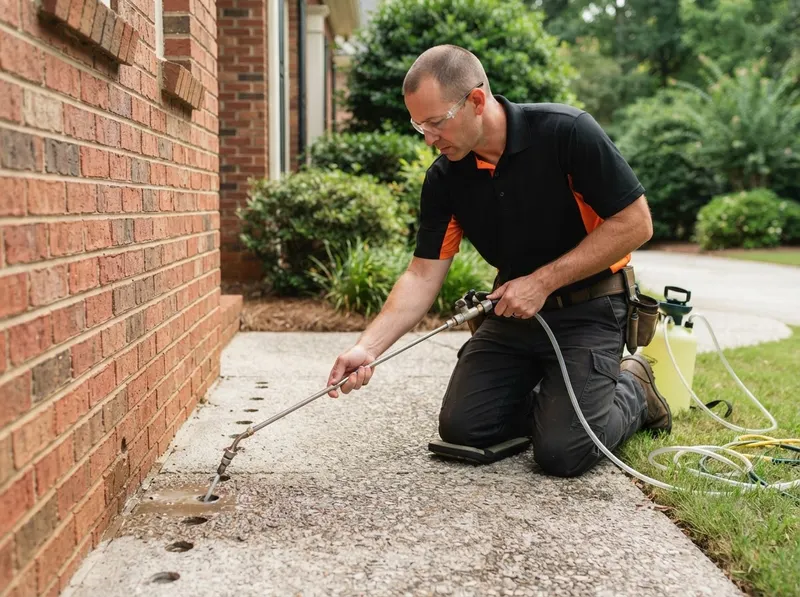
Subterranean Termite Liquid Barrier Treatment in Atlanta, GA

Subterranean Termite Liquid Barrier Treatment

Subterranean termite defense utilizes trench-and-treat liquid barrier applications of non-repellent termiticides containing 0.06% fipronil along structural foundation perimeters. High moisture retention in native Georgia red clay soils accelerates the movement of subterranean termites (Reticulitermes flavipes) along brick piers and masonry stems. Technicians excavate continuous trenches four to six inches wide and six inches deep, saturating backfill soil at an exact rate of four gallons per ten linear feet per foot of depth. This creates an invisible, lethal transfer zone that foraging worker termites track back to subterranean brood chambers, neutralizing entire supercolonies without disrupting interior living spaces or releasing airborne chemical aromas.

Get a quote →
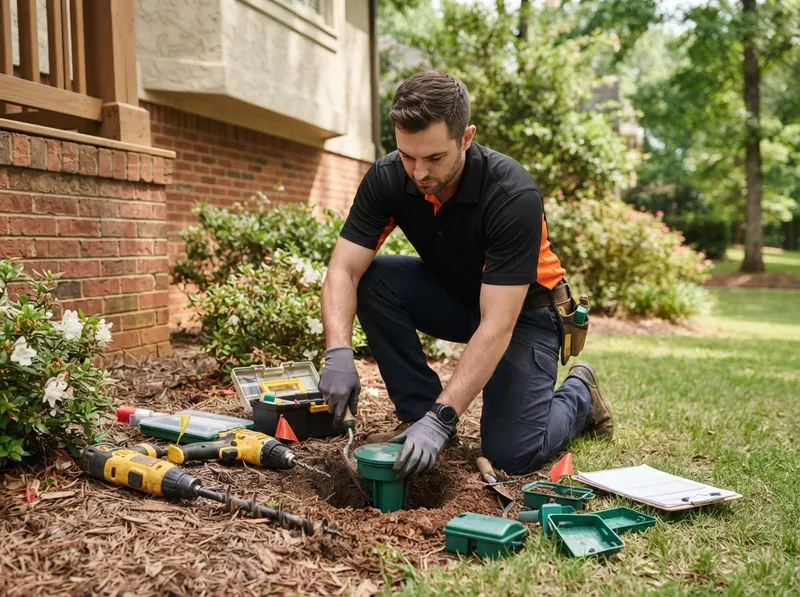
Subterranean Termite Bait Station Array in Atlanta, GA

Subterranean Termite Bait Station Array

Termite baiting arrays establish an exterior perimeter defense perimeter using low-profile, tamper-resistant monitoring stations embedded flush into exterior turf and garden perimeters every ten to fifteen feet. Each station contains cellulose matrices impregnated with chitin synthesis inhibitors like noviflumuron or hexaflumuron. Foraging worker termites ingest the active insect growth regulator and distribute the slow-acting compound throughout subterranean nest hierarchies via trophallaxis. Station arrays protect properties bordered by extensive hardscaping, stone terraces, or sensitive botanical gardens where expansive concrete drilling and perimeter soil trenching are undesirable or structurally unfeasible.

Get a quote →
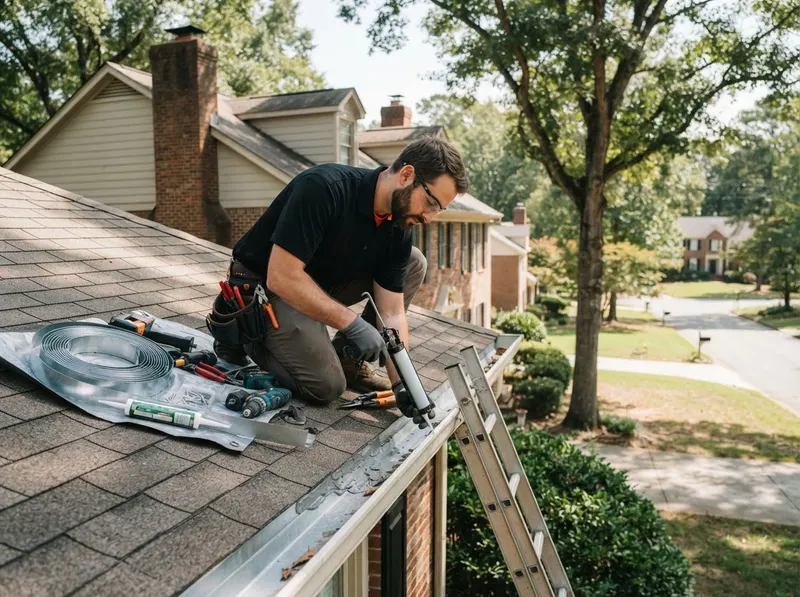
Roof Rat Structural Exclusion and Attic Defense in Atlanta, GA

Roof Rat Structural Exclusion and Attic Defense

Rodent exclusion secures building envelopes against roof rats (Rattus rattus) utilizing 1/4-inch welded 19-gauge galvanized wire mesh, custom-bent metal flashing, and expanding polyurethane elastomeric foam across roof returns, frieze boards, and crawlspace air vents. Technicians seal architectural clearances larger than a half-inch, closing off primary attic thermal bypasses and structural entryways. Eliminating access protects blown-in cellulose attic insulation from nesting trails, eliminates gnawing hazards on electrical conduit lines, and halts urine contamination over drywall ceilings without deploying interior toxic rodenticide baits that cause indoor carcass decomposition.

Get a quote →
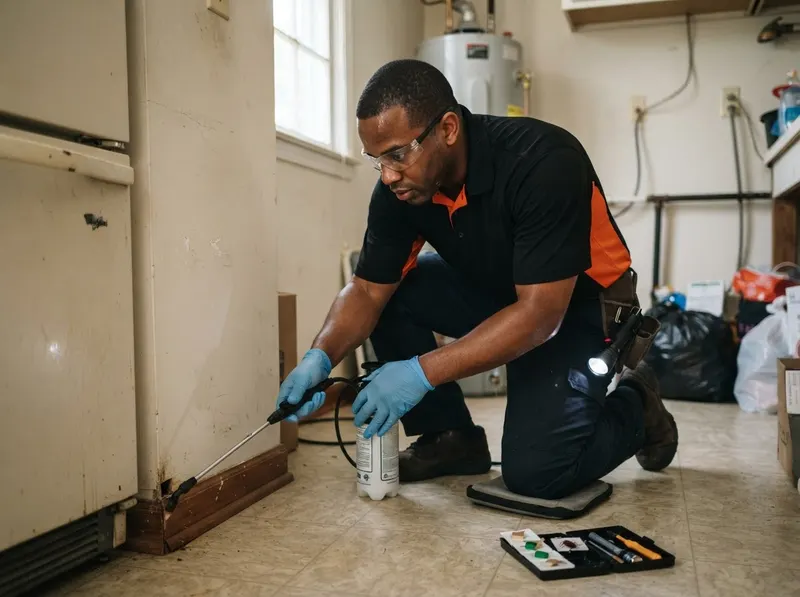
Smokybrown and German Cockroach Abatement in Atlanta, GA

Smokybrown and German Cockroach Abatement

Cockroach management applies target-specific insect growth regulators and botanical micro-gel matrices within wall voids, plumbing chases, utility pipe sleeves, and crawlspace perimeter access hatches. By incorporating hydramethylnon or indoxacarb gel baits in micro-dosages directly into hidden structural seams, the process halts reproductive maturation cycles of peridomestic Smokybrown roaches and domestic German cockroaches. This methodical protocol avoids broad atmospheric pesticide sprays, protecting ambient household air quality while eliminating nesting colonies residing deep inside cabinetry framework and dead-space plumbing walls.

Get a quote →
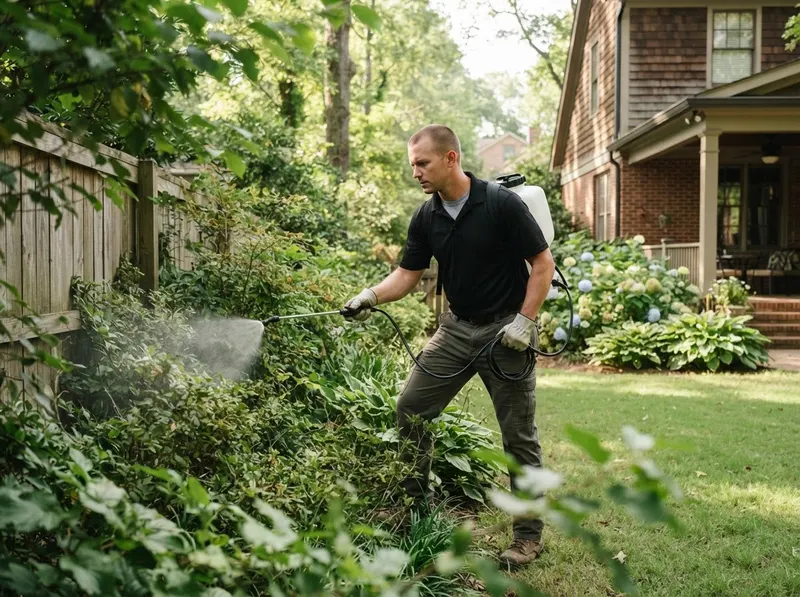
Residential Mosquito Yard Mitigation in Atlanta, GA

Residential Mosquito Yard Mitigation

Outdoor mosquito reduction combines targeted biological larvicides containing Bacillus thuringiensis israelensis (BTI) in standing water holding zones with micro-encapsulated foliage applications along shaded perimeter understory canopies. Focus remains strictly on primary diurnal resting harborage sites beneath broadleaf hardwoods, dense English ivy groundcover, and shaded foundation plantings to suppress Asian tiger mosquitoes (Aedes albopictus). Field applications avoid flowering pollinator blooms, operating through specialized low-pressure droplet equipment that coats leaf undersides where target insects harbor during daytime heat peaks.

Get a quote →
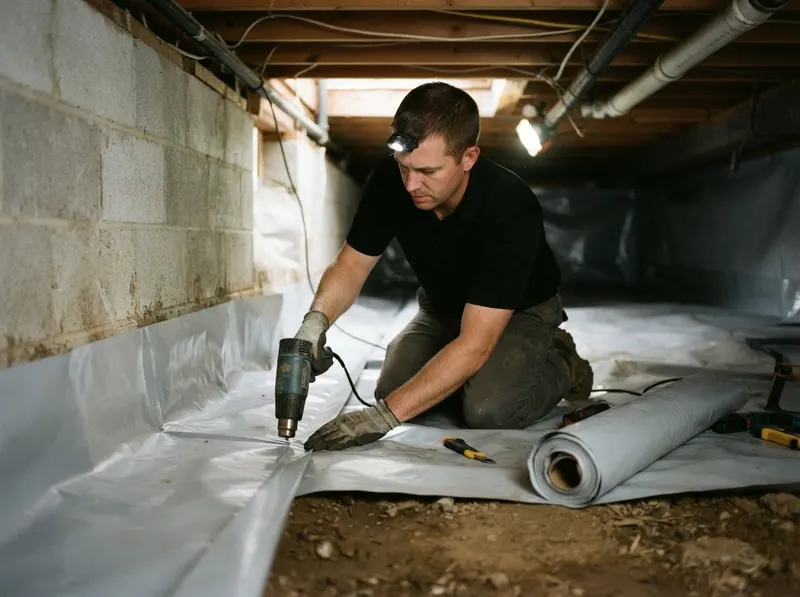
Crawlspace Encapsulation Pest Barrier in Atlanta, GA

Crawlspace Encapsulation Pest Barrier

Crawlspace environmental remediation addresses structural moisture vectors by laying 12-to-20-mil reinforced antimicrobial polyethylene vapor barriers over raw dirt floors, sealing foundation air vents with moisture-tight closed-cell insulation boards, and establishing commercial dehumidification. Maintaining crawlspace relative humidity consistently below 55% deprives wood-boring beetles, subterranean termites, and silverfish of vital ambient hydration. Encapsulation also preserves heart-pine subflooring from structural decay fungi and prevents soil-dwelling pests from ascending via hollow interior masonry piers.

Get a quote →
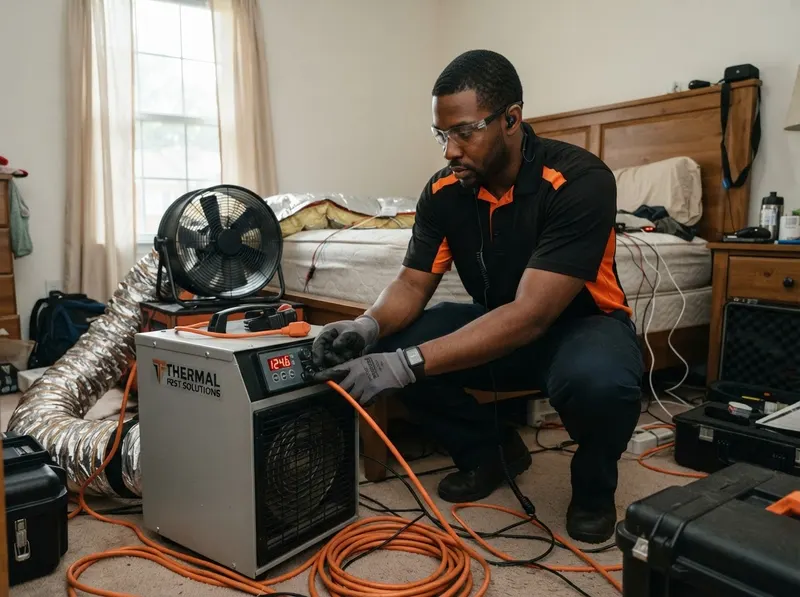
Whole-Structure Bed Bug Thermal Remediation in Atlanta, GA

Whole-Structure Bed Bug Thermal Remediation

Bed bug thermal remediation elevates ambient structure temperatures between 122°F and 135°F using industrial high-output electric heat-generation equipment monitored by multi-point digital thermocouple sensors. Sustained thermal saturation across a four-to-six-hour holding period penetrates deep mattress seams, baseboard channels, wall framing voids, and upholstered furniture. This single-treatment non-chemical process denatures cellular proteins across every biological life stage, destroying desiccated eggs, nymphs, and mature adults simultaneously without leaving synthetic chemical residues on residential bedding surfaces.

Get a quote →
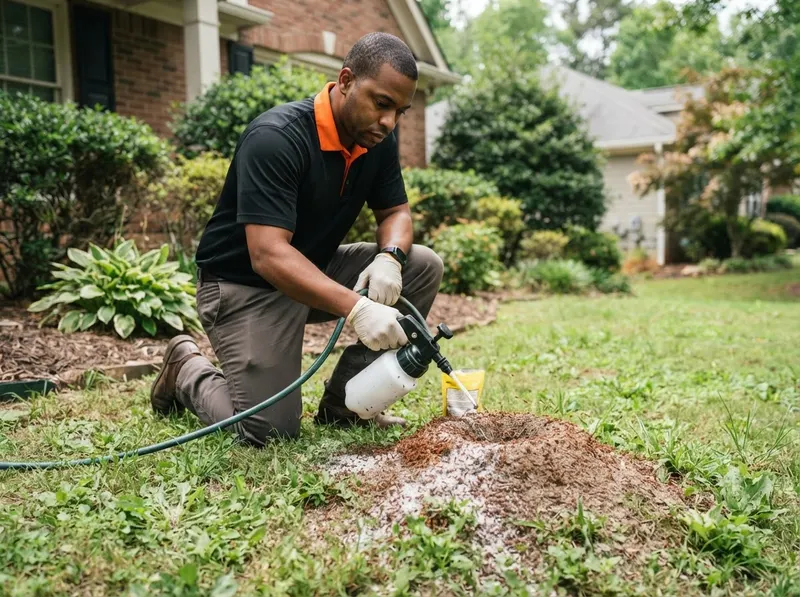
Solenopsis invicta Fire Ant Colony Eradication in Atlanta, GA

Solenopsis invicta Fire Ant Colony Eradication

Targeted fire ant management eliminates Solenopsis invicta through precision two-step protocols that combine seasonal low-toxicity granular bait dispersals with localized active mound drenching. Foraging workers collect granular abamectin or hydramethylnon baits, transporting the slow-acting compound down subterranean chambers to the reproductive queen. Secondary targeted botanical drenches neutralize defensive multi-queen mound clusters bordering brick walkways, patios, and outdoor recreational play lawns, stopping painful stinging hazards across residential turf grass.

Get a quote →
The essentials

What Atlanta customers should know

  • Subterranean termite management in Atlanta utilizes non-repellent liquid soil barriers containing 0.06% fipronil applied along trenches or targeted slow-acting bait stations spaced precisely every 10 to 15 linear feet along residential foundation walls.
  • Comprehensive initial on-site diagnostics start at a minimum fee of $250, providing an exhaustive evaluation of crawlspace relative humidity, perimeter sub-flooring, soffit clearances, and interior plumbing penetrations.
  • Targeted rodent exclusion replaces repetitive interior rodenticides with mechanical copper mesh, 1/4-inch 19-gauge galvanized hardware cloth, and elastomeric structural sealants along historic mortar gaps and exterior roof returns.
  • Seasonal pest pressures across Fulton County peak during spring subterranean termite dispersal flights from late February through May, outdoor mosquito surges from May through September, and fall roof rat migration into conditioned attic envelopes from October through January.
  • Direct service scheduling and diagnostic photo evaluations are coordinated through the central administrative dispatch at (943) 285-3386.
The Brass Lantern Pest Control standard

Why Atlanta keeps calling us back

01

A clear, written price

You get a firm, itemized quote for your pest control service before any work begins, no surprises, no pressure.

02

Your property, protected

Careful prep, tidy work, and a full cleanup when we are done. We treat your home and belongings like our own.

03

One crew, start to finish

The same trusted, background-checked team from the first call to the final check.

Buyer's guide

Choosing the right pest control service pro in Atlanta

Selecting structural pest interventions requires matching building architecture directly against pest biology rather than deploying blanket perimeter applications across an entire parcel. If a property features an open, unencapsulated crawlspace or historic stacked-stone foundation typical of 1920s bungalows in Grant Park or Inman Park, choose physical exclusion barrier sealing paired with targeted void micro-injections; this halts pest entry through foundation voids while avoiding chemical runoff into dense Piedmont clay. If a home is constructed on a monolithic slab with exterior rigid foam insulation contact, choose exterior bait array monitoring coupled with non-repellent perimeter barrier treatments.

The operational trade-off centers on upfront mechanical labor versus recurring chemical interventions: mechanical exclusion incurs a higher initial capital investment to seal architectural access points permanently with sheet metal flashing and galvanized wire mesh, whereas recurring low-toxicity perimeter treatments require consistent quarterly maintenance visits without physically altering structural masonry. For crawling insects such as Smokybrown cockroaches or Argentine ants, exterior granular bands combined with structural door-sweep replacements provide reliable perimeter defense; conversely, indoor broadcast aerosol applications yield temporary knockdowns while dispersing surviving insects deeper into wall voids and subfloor assemblies. For wood-destroying organisms, liquid trenching provides immediate continuous sub-surface chemical protection, whereas subterranean bait stations operate through colony transfer dynamics over sixty to ninety days, presenting a clear trade-off between immediate barrier creation and non-invasive exterior soil installation.

Investment

Pest Control Service cost in Atlanta

Every project gets a firm, written price after a free on-site visit. Ranges below for orientation.

Comprehensive Structural Diagnostic & Initial Treatment$250, $375
Targeted Termite Liquid Barrier Installation (per linear ft / whole-home)$950, $2,800
Perimeter Termite Baiting System Installation & Annual Monitoring$850, $1,650
Mechanical Rodent Envelope Exclusion & Attic Sanitization$650, $2,100
Quarterly Perimeter Maintenance Program (single-family residence)$250, $425
Crawlspace Vapor Barrier & Moisture Remediation Setup$1,800, $4,500
Seasonal Mosquito Suppression Program (May through September, monthly)$450, $850
Whole-Structure Thermal Bed Bug Remediation (per treated zone)$1,200, $3,200
Exterior Fire Ant Turf & Landscape Abatement (up to 0.5 acre)$275, $475
Carpenter Bee Gallery Boring Remediation & Dowel Sealing$325, $650
Targeted Wood-Destroying Organism (WDO) Inspection & Clearance Report$250, $350
Free, no-pressure estimate

Get it done right

Tell us about your pest control service job and we'll send a clear, written quote, usually the same day. Or just call and talk to a real Atlanta pro.

(943) 285-3386
Get your free pest control service quote, Atlanta

We only use your ZIP to check availability, no spam.

Where we work

Areas we serve near Atlanta

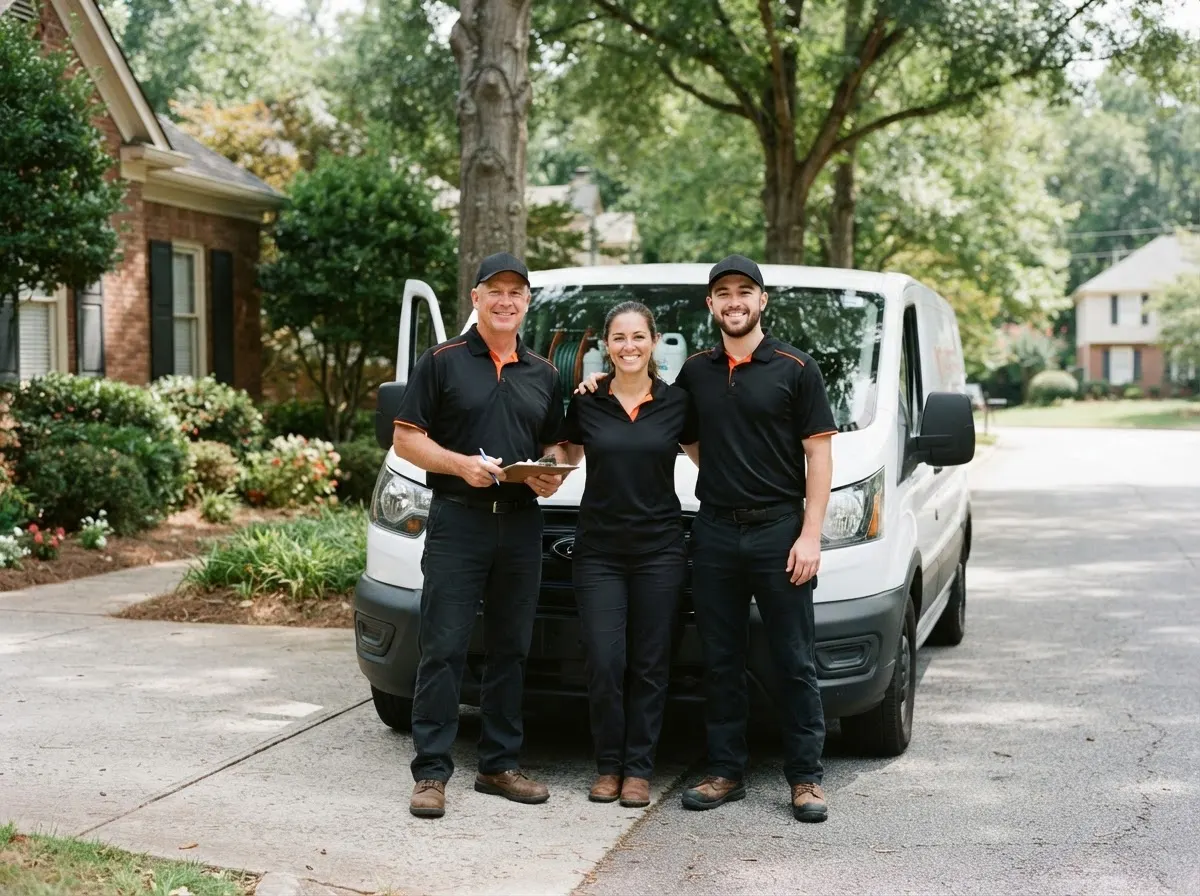
Brass Lantern Pest Control pest control service team in Atlanta, GA

Atlanta's urban tree canopy, combined with dense Piedmont red clay and prolonged summer relative humidity, creates specialized moisture microclimates that drive aggressive structural pest pressures inside Fulton County residences. Historic timber framing in Inman Park, Virginia-Highland, and Ansley Park frequently interfaces directly with damp foundation perimeter soils near properties adjacent to the Atlanta Botanical Garden and Fernbank Museum of Natural History. These biological dynamics accelerate subterranean termite foraging along interior plumbing chases and draw roof rats into tree-shaded rooflines, necessitating architectural exclusion techniques over generic exterior chemical spraying. Properties along Moreland Avenue, Dekalb Avenue, and Ponce de Leon Avenue routinely contend with heavy rodent and peridomestic cockroach traffic stemming from mixed-use transit corridors and centuries-old municipal storm drainage infrastructure. In neighborhoods like Grant Park and Cabbagetown, historic homes constructed on unmortared granite-block piers or stacked fieldstone lack modern poured-concrete capillary breaks, allowing ground moisture to wick into floor joists. Native Georgia red clay around Midtown and Buckhead exhibits slow percolation rates, causing pooled surface water that fuels rapid mosquito breeding near Centennial Olympic Park and Zoo Atlanta. These distinct environmental parameters dictate specialized home defense strategies engineered specifically for historic masonry stabilization, crawlspace humidity management, and localized biological vector suppression across north-central Georgia.

BuckheadInman ParkVirginia-HighlandMidtownGrant ParkOld Fourth WardCabbagetownWest EndAnsley ParkKirkwood
Questions

Common questions

What specific factors determine pest control service costs in Atlanta?
Total investment reflects structural square footage, foundation design, and target species biology. Complete professional interventions across Fulton County carry a minimum service floor of $250 for comprehensive diagnostics and baseline containment. Full-perimeter subterranean termite treatments range from $950 to $2,800 depending on linear footage and soil access, while specialized attic rodent exclusion varies from $650 to $2,100 based on the number of architectural roof entries requiring 19-gauge hardware cloth and structural sealing. Moisture abatement programs including crawlspace vapor barrier installations range between $1,800 and $4,500 depending on structural clearance and total ground square footage.
How frequently should residential pest control service be completed in Atlanta?
Perimeter defense programs generally follow a quarterly schedule to maintain protective chemical barrier integrity against regional climate breakdown. High annual rainfall, intense humidity, and UV exposure around Midtown and Ansley Park degrade surface-applied barrier residuals within 60 to 90 days. Quarterly treatments coincide with seasonal shifts: late-winter termite emergence, spring mosquito surges, summer cockroach escalations, and autumn rodent migrations seeking indoor heat sources. For active infestations of German cockroaches or bed bugs, bi-weekly follow-up visits are scheduled across an initial 30-day window to disrupt egg incubation lifecycles.
Are low-toxicity pest control products safe for households with pets in Atlanta?
Modern pest control protocols rely on targeted formulations including micro-encapsulated suspensions, synthetic pyrethroids, and insect growth regulators that bind directly to applied surfaces once dry. When perimeter treatments along baseboards and exterior foundations dry completely, typically requiring two to three hours, the potential for residential pet exposure drops to negligible levels. Interior treatments prioritize inaccessible wall voids, enclosed bait stations, and subterranean micro-injections rather than broadcast atmospheric applications, ensuring cats and dogs have zero direct contact with active pest-management materials.
How does Atlanta building architecture influence subterranean termite vulnerability?
Crawlspace foundations and historic homes built throughout Grant Park, Cabbagetown, and the West End frequently feature direct wood-to-soil contact, stacked stone, or unsealed brick piers that conceal mud inspection tubes. Atlanta's native clay retains elevated moisture levels after seasonal rain storms, driving Reticulitermes flavipes colonies upwards into damp framing timbers. Trenching foundation perimeters and treating crawlspace piers with non-repellent termiticides creates an uninterrupted continuous treatment zone that neutralizes foraging workers before structural framing takes permanent structural damage.
What signs indicate roof rat activity in an Atlanta attic?
Indicators include dark, 1/2-inch tapered droppings along attic walkways, scratch marks along rafter ties, compressed insulation runs, and grease smudge trails flanking frieze boards and gable vents. Because roof rats exploit overhanging oak branches common near Centennial Olympic Park and Zoo Atlanta, property owners frequently detect light scurrying noises overhead between 10:00 PM and 4:00 AM before any daytime physical sightings occur. Finding shredded duct insulation or chewed electrical wire casing confirms active structural nesting that requires mechanical envelope exclusion.
Why are Smokybrown cockroaches so prevalent around historic Atlanta properties?
Smokybrown cockroaches (Periplaneta fuliginosa) thrive in humid microclimates provided by mature hardwood canopies, non-native English ivy groundcover, and decaying organic debris common throughout Virginia-Highland and Inman Park. Unlike German cockroaches, Smokybrowns inhabit exterior tree hollows, soffit gaps, and leaf-filled gutters, entering living spaces through attic louver vents and unsealed chimney flashing during prolonged hot dry spells. Lasting control requires clearing gutter debris, installing exterior door sweeps, and applying granular perimeter baits rather than spraying baseboards indoors.
What is the difference between subterranean termite liquid treatments and baiting stations?
Liquid treatments involve excavating a continuous trench around exterior foundation footings and pumping non-repellent termiticide into the soil to establish an immediate, continuous lethal contact zone. Baiting systems utilize discrete plastic stations installed in the turf every 10 to 15 feet containing cellulose cartridges laced with insect growth regulators. Liquid treatments provide immediate perimeter chemical boundaries, whereas bait stations require foraging termites to find the monitors, feed on the matrix, and spread the regulatory compound through the nest over several weeks.
How does crawlspace encapsulation prevent pest infestations in Atlanta homes?
Crawlspace encapsulation seals raw ground soil beneath heavy 12-to-20-mil puncture-resistant polyethylene vapor barriers while sealing open foundation vents and introducing dedicated mechanical dehumidification. By stabilizing relative humidity below 55%, the environment halts the growth of wood-decaying fungi and desiccates soft-bodied insects like silverfish, subterranean termites, and wood-boring powderpost beetles. Eliminating damp soil odors also removes the chemical cues that guide peridomestic pests and rodents through foundation vents into conditioned subfloors.
Can over-the-counter pest sprays solve a German cockroach infestation in Atlanta?
Over-the-counter aerosol sprays contain fast-acting repellent pyrethroids that scatter German cockroach colonies, driving breeding females deep into inaccessible wall cavities and electrical appliances. This scattering effect, known as budding, multiplies secondary breeding clusters throughout kitchens and bathrooms. Professional remediation relies on non-repellent insect growth regulators, micro-gel baits with active food attractants, and targeted crack-and-crevice placements that foraging nymphs ingest and transfer throughout aggregate nest pockets without triggering avoidance behaviors.
What should an Atlanta homeowner do to prepare for a residential pest inspection?
Homeowners should clear a two-foot continuous perimeter along exterior foundation walls by trimming dense shrubbery and moving stored items such as firewood stacks or building materials. Indoors, access hatches to crawlspaces, basement utility corners, and attic drop-down stairs must remain unlocked and unobstructed. Property managers are advised not to wash away active insect trails or spray aerosol insecticides along baseboards prior to the diagnostic visit, as preserved biological evidence allows technicians to accurately identify entry vectors and species variants.
How do seasonal temperature drops in Fulton County affect rodent migration patterns?
When overnight temperatures drop consistently below 50°F between late October and November across Fulton County, roof rats and house mice seek warm shelter within conditioned attic envelopes and insulated wall voids. Rodents detect warm airflow escaping from attic roof returns, plumbing vent pipe clearances, and damaged soffits. Once inside, nesting pairs exploit thermal insulation materials, requiring proactive mechanical exclusion and mesh installation before fall cold snaps trigger structural indoor invasions.
What specific permits or regulations govern wood-destroying organism inspections in Atlanta?
Official Wood-Destroying Organism (WDO) clearance documentation in Atlanta must comply with the Georgia Structural Pest Control Act administered by the Georgia Department of Agriculture. Inspections evaluate active or prior infestations of subterranean termites, powderpost beetles, wood-decay fungi, and carpenter ants. Certified operators inspect visible, accessible structural framing timbers, issuing an official State of Georgia Wood Infestation Inspection Report detailing structural damage, visible evidence of prior treatments, and active architectural moisture conditions.

Get started today

Free estimates for Atlanta & the surrounding area.

Helpful resources

Trusted references & local links

USA.gov, government & consumer helpBetter Business BureauFTC Consumer AdviceU.S. Small Business AdministrationReady.govU.S. EPAENERGY STARU.S. Dept. of EnergyConsumer.govU.S. Census BureauGoogle Maps, Atlanta, GA

Atlanta Pest Control Service guides

How much does professional pest control service cost in Atlanta?, Complete Guide →What is the average cost of termite treatment for an Atlanta home?, Complete Guide →Can I get same-day emergency pest control service in Atlanta GA?, Complete Guide →Pest Control Service →