Solenopsis invicta fire ant colony eradication in Atlanta addresses the specific biological resilience of the red imported fire ant in Georgia's Piedmont soil. Atlanta's dense clay retains moisture, allowing…
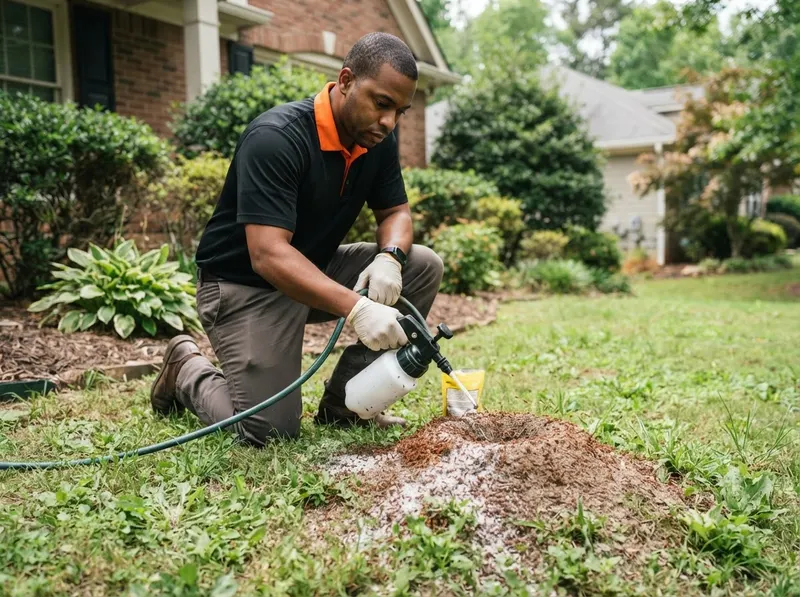
Solenopsis invicta fire ant colony eradication in Atlanta addresses the specific biological resilience of the red imported fire ant in Georgia's Piedmont soil. Atlanta's dense clay retains moisture, allowing subterranean galleries to penetrate four to six feet deep beneath root zones, granite foundations, and brick walkways in neighborhoods such as Inman Park, Grant Park, and Virginia-Highland. Surface contact insecticides purchased at hardware retailers trigger colony budding, where worker ants detect the repellent barrier and split into multiple satellite mounds containing alternate reproductive queens. A methodical eradication strategy bypasses surface workers to target the reproductive center using low-toxicity insect growth regulators (IGRs) combined with metabolic inhibitors that workers carry directly to the queen. This stops egg viability within two to three weeks without saturating domestic turf with organophosphates, maintaining child and domestic pet safety.
Properties bordering urban tree canopies and green infrastructure, including historic home sites in Ansley Park, Cabbagetown, and the West End, require micro-targeted placement. A 0.25-acre lot typically harbors three to eight distinct mound entrances linked through lateral subsurface foraging tunnels. When mounds abut stone hardscapes, HVAC pads, or electrical conduits near Midtown and Old Fourth Ward residences, pressurized liquid injection introduces botanical active ingredients directly into vertical escape chambers. This deliberate methodology prevents colony relocation into interior wall voids, crawlspaces, or under pine-straw landscaping beds.
1. Initial turf survey: Systematically map all visible surface mounds, hidden secondary vents, and exterior electrical conduit intrusions.
2. Soil moisture testing: Measure the moisture gradient in the upper six inches of topsoil to determine optimal non-repellent bait uptake.
3. Calibrated bait distribution: Apply weather-stable micro-baits within a 15-foot foraging radius around each colony hub during active morning or dusk foraging windows.
4. Mound core saturation: Apply low-volume pressurized non-repellent agents to high-risk mounds located adjacent to masonry foundations or play structures.
5. Post-treatment audit: Re-inspect the turf grid after 21 days to verify the cessation of foraging workers and the termination of brood production.
Every job gets a firm, written price after a free on-site visit.
Tell us about your solenopsis invicta fire ant colony eradication job in Atlanta and we'll send a clear, written quote, usually the same day.
 Brass Lantern Pest Control